Weekly Roundup 4/14/15

Reading: Musicophilia: Tales of Music and the Brain, Oliver Sacks

Arranging: Da Pacem Domine, by Arvo Pärt. Originally for choir, I am transcribing it for Metro Brass’s 11-piece lineup. We will be performing it on June 4th. Concert Details.

Practicing: Red Dragonfly, Annie Laurie, chromatic scale patterns, sight-reading

Rehearsing: Metro Brass had a great rehearsal Sunday night.

Performing: No gigs currently booked until May.

Listening: Have had a little break from consuming anything new, musically. Taking in the sounds of spring as it develops instead.

Teaching: Preparing folks for contest performances as well as upcoming auditions.

Relaxing: The Garden is open again! For those who don’t know, I volunteer at Eloise Butler Wildflower Garden in Theo Wirth Park. It’s my favorite place on the PLANET (besides my bed) and you should defintely come visit if you haven’t ever been, or if it’s been a while. Right now, the spring ephemerals are coming up- don’t blink or you’ll miss them!

Women’s History Month Profile: Jan Kagarice

March feature! Each week I will profile a different woman or women in music who are particular heroes or inspiration for me.

This week, please welcome to the stage

MS JAN KAGARICE!

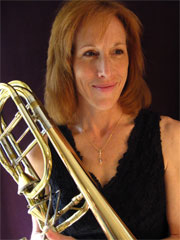
Kagarice-Jan

The goal of music is communication, not perfection.

Musician, scholar, pedagogue, force of nature, Jan Kagarice is senior lecturer of trombone at the University of North Texas. She’s taught and lectured all over the world, and was a founding member of internationally acclaimed trombone quartet PRISMA.

Jan’s teaching method focuses on methods garnered from greats like Arnold Jacobs and John Marcellus. She studies nearly everything having to do with how we learn to create a comprehensive approach. It’s all about the music, and what we say with our unique skills. 99.9% of what I tell my students comes from her. 100% of who I am as a performer is thanks to my time studying with her. It’s hard to put into words what my time at UNT meant to me, because I’m still processing so much of it. Needless to say, I wouldn’t still be working as a trombone player without the things I learned from Jan.

In addition to instilling these traits in her students, she also works with musicians affected by focal dystonia, a disorder that in the past has prevented many brass musicians from continuing their careers.

While a first-class performer herself, there’s not a lot to be found of her own recordings on the internet. What we do have, though, is a long and continuing legacy of her students whose performances speak to her enormous influence. Please enjoy my favorite trombone quartet, Maniacal 4, performing a piece written for Ms Kagarice, “Janet”.


Women’s History Month Profile: Lauren Veronie Curran

March feature! Each week I will profile a different woman or women in music who are particular heroes or inspiration for me.

This week, please welcome to the stage

MS LAUREN VERONIE CURRAN!

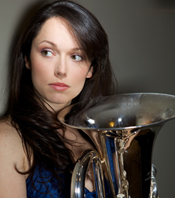
headshot1

Lauren Veronie Curran is cool not just because we share a name, or because we went to school together at North Texas. She’s cool because she’s following her dreams boldly and without apology. She’s cool because she rocks at euphonium and she wants to share it with you.

Lauren studied with Dr Brian Bowman at UNT, and in 2008 won a position in the US Army Field Band. Since taking the chair she has toured worldwide and performed to countless audiences, bringing her unique joy and energy for music to her listeners.

So far this month I’ve featured a jazz artist, an orchestral performer, and a solo artist/teacher. But for those looking for careers in music, you can often look no further than your country’s military bands. They offer competitive salary, benefits, and a chance to see the world and work with musicians at the top of their fields. Lauren’s career is a good example of what you can do with the Army behind you.

Her blog is insightful, inspirational, and hilarious. You should check it out.

Meanwhile, here’s Lauren performing “Midnight Euphonium” by Goff Richards, with her own US Army Field Band.

Women’s History Month Profile: Velvet Brown

March feature! Each week I will profile a different woman or women in music who are particular heroes or inspiration for me.

This week, please welcome to the stage

MS VELVET BROWN!

Monarch-Brass-05[Velvet-Brown]

Velvet Brown is professor of tuba and euphonium at Penn State University. She also maintains an active schedule of performances, clinics, and master classes. In 2002 she appeared at the University of Wisconsin-Madison, where a young yours-truly met her and followed her schedule religiously. As an icon for young women seeking professional careers as a soloist, teacher, composer, or recording artist in the brass world, she is inspirational.

In addition to collaborating with several prestigious performing groups she has recorded four of her own solo CDs and both commissioned and composed her own works.

She’s the tuba player for the Stiletto Brass Quintet, an all-female super group that’s been winning recognition around the world for their superior performances.

Check out her first album, Velvet, which has been a staple of my collection for a long time.

In the meantime, listen to Velvet Brown perform “How Beautiful” by Barbara York:

Women’s History Month Profile: Megumi Kanda

March feature! Each week I will profile a different woman or women in music who are particular heroes or inspiration for me.

This week, please welcome to the stage

MS MEGUMI KANDA!

Unknown

I wanted to be like those women, strong but elegant, and to make a path for other girl trombonists.

Tokyo native Megumi Kanda is one of the few women in the United States (or the world, for that matter!) to hold a trombone position in a major orchestra. She stole the scene at Milwaukee Symphony Orchestra in 2002, winning the audition so resolutely the committee bypassed the trial period generally reserved for new musicians.

She began playing trombone at the age of 10 in Japan and moved to the United States to study at Cleveland Institute of Music with James DeSano. Prior to winning her MSO gig she played with the Rochester and Albany orchestras.

Most recently composer Amy Riebs Mills wrote a piece for her called “Red Dragonfly”, using thematic elements from one of Ms Kanda’s favorite Japanese songs. She premiered the work in 2013 at the International Trombone Festival in Columbus, Georgia.

She’s also performed as soloist in front of her own orchestra, and more information on that and her work so far can be found here: http://www.jsonline.com/entertainment/arts/113082274.htmlmegum

Women’s History Month Profile: Melba Liston

March feature! Each week I will profile a different woman or women in music who are particular heroes or inspiration for me.

This week is someone new to me but immediately important. Please welcome to the stage

MS MELBA LISTON!

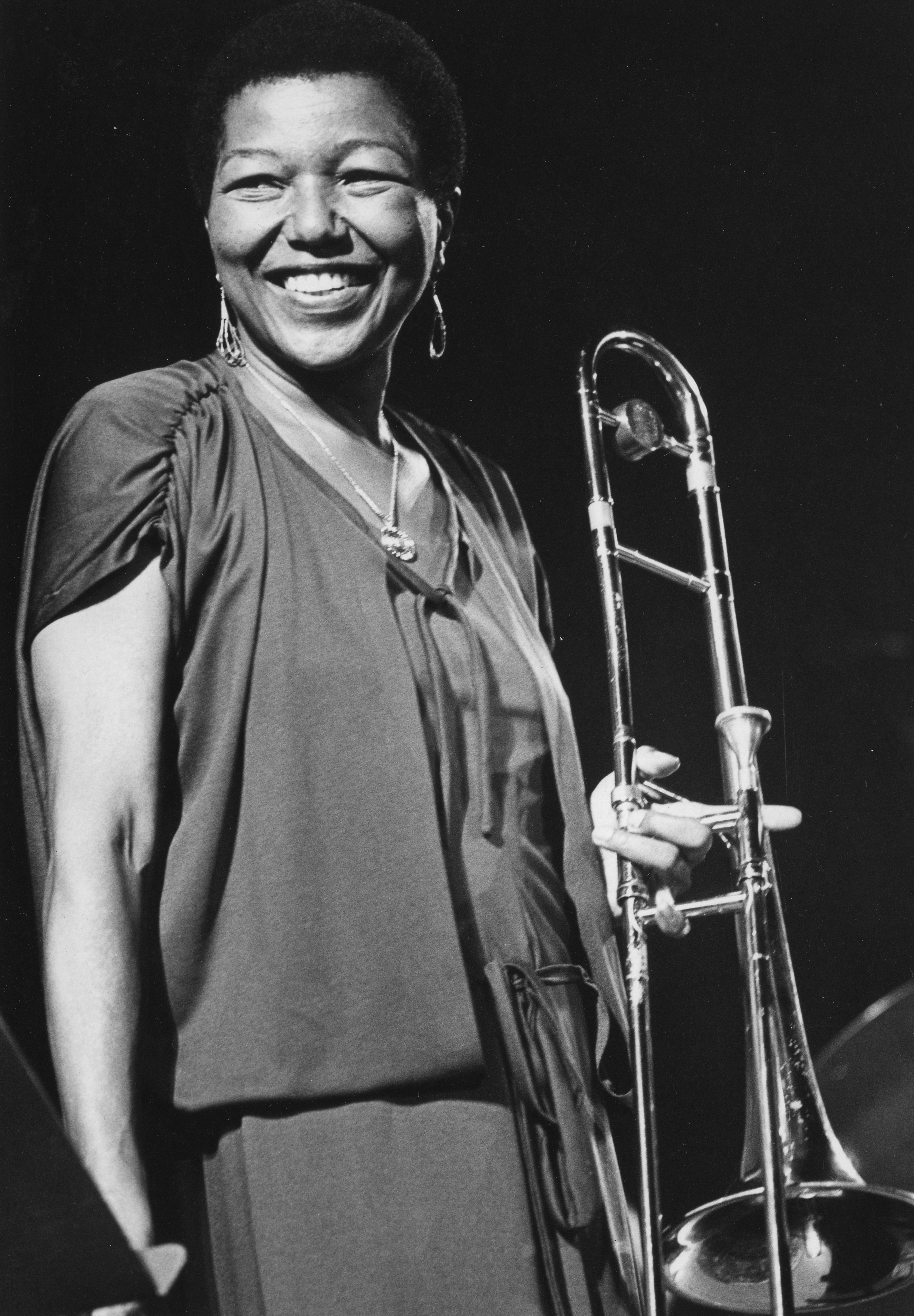
cue-476-MELBA-STANDING-@-KC-FEST-COMER-AND-GREGG-updated-7-20-10-PNG

When I saw the trombone I thought how beautiful it looked and knew I just had to have one. No one told me that it was difficult to master. All I knew was that it was pretty and I wanted one.

Jazz trombonist, arranger, composer, and band leader, Melba Liston toured with Billie Holiday, Dexter Gordon, Dizzy Gillespie, and John Lewis. She began playing trombone around the age of 8, and was largely self-taught. At 16 she started her professional career at the Lincoln Theatre in Los Angeles, and by her 20s was on the road with some of the biggest jazz performers of her day. Her career spanned 40 years, encompassing her own studio album, Melba Liston and Her ‘Bones, writing and arranging for Quincy Jones, teaching music in Los Angeles and Jamaica, and even a short stint as an actress in Hollywood.

A good deal more information about the life and career of this amazing, unsung woman from jazz history can be found here: http://www.randyweston.info/randy-weston-sidemen-pages/melba-liston.html

You can find her album on iTunes and GooglePlay, and listen to tracks on YouTube. Here’s “Blues Melba” featuring the true first lady of the slide trombone, Melba Liston.

Why Students Really Quit

Why Students Really Quit Their Instrument (and how parents can prevent it)

An interesting look at what motivates young musical learners.

Some pertinent quotes as they relate to taking lessons:

Students don’t know how to get better.  Without the proper tools and practice habits to get better at anything, students will become frustrated and want to quit.  It is the role of music educators and parents to give students ownership over their learning.  Teachers must teach students why, how, where, and when to practice, and parents must obtain minimal knowledge about how students learn music in order to properly support them at home.

Most of learning an instrument is learning how to practice, and your private teacher is there to guide you to efficiency in this regard.

Students discontinue playing over the summer.  Statistics show that students who do not read over the summer find themselves extremely behind once school starts — the same goes for playing an instrument!  A year of musical instruction can quickly go down the tubes over the summer vacation if students do not find small ways to play once in a while.  Picking up an instrument for the first time after a long layoff can be so frustrating that a student will not want to continue into the next school year.

I offer summer lessons, and I think they can be some of the most fun. We get more opportunities to play fun things and grow creatively when we can guide our own studies.

The instrument is in disrepair.  A worn down cork, poor working reed, or small dent can wreak havoc on a child’s playing ability.  Sometimes the malfunction is so subtle that the student thinks they are doing something wrong, and frustration mounts.  Students, parents and teachers need to be aware of the basics of instrument maintenance and be on top of repairs when needed.

Instruments that are hard to play are not fun to play. Let me know if your horn needs help, and I will recommend a good repairperson (I know several)!

And parents, I am always available to help you understand what your child is learning from me (and why!).

Happy practicing!

2015 Upcoming extracurricular opportunities

Students, teachers, friends:

There’s a life outside of school band! I strongly encourage all my students, regardless of ability or level, to find additional opportunities to perform and practice their craft. This might be playing duets with friends, or putting together a chamber group. There are also several groups around the Cities that put together talented young musicians to create art.

For students interested in orchestra performance, I recommend looking into either Minnesota Youth Symphonies or the Greater Twin Cities Youth Symphony.

MYS Auditions for low brass are Saturday, June 13th.

GTCYS Auditions for low brass are May 30th, 31st, and June 6th.

For the trombone student who wants to dive deeper into the intricacies of the instrument, I highly recommend the Shell Lake Arts Center Trombone Workshop. My friends and colleagues John Tranter and Phil Ostrander run this week long retreat in Shell Lake, WI. There is a possibility I may stop by as a guest artist!

In addition to the Trombone Workshop Shell Lake offers a whole summer of wind bands, orchestras, and jazz ensembles! I highly recommend you take a look at their offerings.

For those who want to ROCK OUT this summer, West Bank School of Music runs three weeks of youth rock camps. I will have more information about this soon, including exact dates.  You do not need to know how to play a rock band instrument; we will teach you! And we’ll have plenty of opportunities for brass players to shine.

If you’re interested in chamber music, I can put you together with other interested students! I currently have three students in a trombone trio, and I can connect with other teachers to create brass quintets, quartets, choirs, you name it!

What I’m working on this week

AKA A fresh look at something familiar.

Learning to rely on your ear, if it’s not intrinsic for you, can be pretty terrifying. As a musician I have a good feel for phrasing, tempo, and style, but “playing by ear”, i.e. hearing a tune and repeating it back without seeing the music, has never been my strong suit. In college my two required years of music theory, which included a fair amount of melodic and rhythmic dictation, were a constant source of stress.

Of course, part of the problem was I never filled in a lot of the holes in my earlier music instruction and these classes were far more advanced than the basic theory I’d been given in high school. UW was generously equipped with a music learning lab where I could have gone to self-tutor, but did I ever go? Please. (Music students: don’t be a fool. Go study ear training)

Flash forward to grad school at UNT, and the concept of ‘tune jury’: Jan would select 12 tunes for each of us and we’d be required to learn them in all 12 keys, tested at random. I remember struggling vainly with “Over the Rainbow” in B Major, but ultimately having to test it in Eb, to my tremendous relief. Jan wanted us to follow our ear through these tunes, not thinking about key but about melody, but I was never quite able to do that. The best I could do was analyze the structure of each tune and quickly transpose it.

Over time I’ve sort of fooled myself into thinking that I play by ear this way. In reality, I’m playing by theory, thinking in scale degrees or patterns in order to maneuver different keys. I don’t think there’s anything fundamentally wrong with that, but I decided this week to train myself a little differently.

I started singing each tune in solfege first.

Yeah, you’ll say, but isn’t that just scale degrees?

Technically, yes. But solfege was created for ease of singing, with one syllable for each pitch, so that vocalists could transverse their melodic terrain without having to stutter. It’s also easier to sing a song when you have lyrics, right? Because melody and story are linked in our brains. So solfege becomes a sort of consistent story, with each pitch serving as a character in play. That makes it easier to change key, and helps us hear the specific intervals that make up a tune.

Try it on a simple tune this week. Let’s say “Ode to Joy”-
OtJ starts on the third note of a major scale. That’s solfege “mi” (sing “Do,a Deer” to yourself if you can’t remember solfege). Below each line is what it would look like in the key of C.

Mi mi fa sol sol fa mi re do do re mi mi re re
E E F G G F E D C C D E E D E
Mi mi fa sol sol fa mi re do do re mi re do do
E E F G G F E D C C D E D C C
Re re mi do Re mi fa mi do Re mi fa mi re do re sol
D D E C D E F E C D E F E D C D G
Mi mi fa sol sol fa mi re do do re mi re do do
E E F G G F E D C C D E D C C

Can you sing it on solfege on C, play it on your instrument, and then transpose it (by singing it first and then playing)? Try it for a week in different keys (flats AND sharps, beloved band students of mine), and see what it does for your pitch recognition, intonation, and ability to play by ear.

Happy practicing!

BrassChix 2015

My dear friend Sarah Schmalenberger, who teaches horn at the University of St Thomas, is again putting on her yearly seminar for women and girls who play brass instruments. This year she’s doing things a little differently, partnering with the fine folks at Schmitt Music to do an equipment and technology day.

Check it out, it’s an awesome day of inspiring performances, networking, and above all, camaraderie for ladies who kick brass. 🙂

logo
Brass Chix 2015