Weekly Round-up 3/28/16

Performances: Saturday: Hamline Winds in concert at Sundin Hall! 7:30pm on Hamline University Campus. I’m sitting in as player-coach this semester and enjoying every minute.

I’ve got upcoming masterclasses, performances with Mill City Five and The Satellites, and a big concert planned with Metro Brass upcoming in April and May.

Rehearsals: MC5 meets Wednesday night, Metro meets Sunday- we’re gearing up for spring and summer gigs!

Practicing: Now that Easter is over and spring break has begun for many of my students, I’m looking forward to diving into some new music this week. I’ll start the 3rd movement of Red Dragonfly and I hope to learn most of the 1st movement of the Bourgeois Concerto.

Listening: Podcasts. Still lots and lots of podcasts.

Teaching: I’m refining my method for teaching the natural approach every day. This week, with a little more free time, I’m hoping to deepen my understanding of how our focus controls our product. I’m also making efforts to listen more carefully to what my students are telling me, both explicitly and implicitly.

Studying: “SuperTeaching” by Eric Jensen. Feeling like I need to up my game for my lovely students. Trying to get my hands on a copy of Attention and Motor Skill Learning by Gabriele Wulf.

Relaxing: It’s (mostly) spring break! Bike rides, walks, talks with friends, naps all on the list.
 

Women’s History Month 2016: Poster Girls

(Previous WHM2016 posts: NUNS!, Courtly Ladies)

This week in Women’s History Month, it’s time to break down how women have been represented in art across Western history with instruments, and in particular, brass instruments.

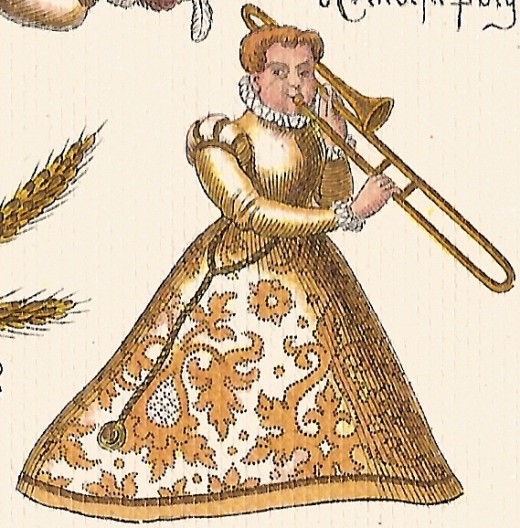
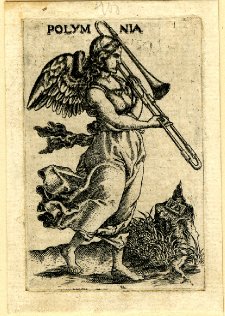
In many cases, women holding trombones and cornettos in early art history are depicted as muses, angels, or mythological figures, and it is uncertain whether the models come from real-life inspiration.

Trombonist as Muse

credit: Will Kimball

Here we see Polyhymnia, muse of sacred poetry and hymns, in her natural element as trombone player. This is from a series of engravings done by Franz Brun in the 1570s depicting all nine muses (1). Why would Brun choose to give Polyhymnia a trombone? At the time, trombone served a significant role in church ensembles, providing a strong compliment to vocal lines that in larger groups imitated the sound of organ. Even as it blended well with vocal lines and organ accompaniment, it did not obscure text or meaning in the way other instruments’ textures might, and was seen as a way of enhancing spiritual communication (2). Thus, our muse of sacred poetry and hymns would know her way around a trombone, the literal muse of the religious world.


Weekly Round-up 3/21/16

Happy Spring!

Performances: Easter Services at Bethlehem Lutheran in S Mpls on March 27th are the next thing up for now! I’ve got upcoming masterclasses, performances with Mill City Five and The Satellites, and a big concert planned with Metro Brass upcoming in April and May.

Rehearsals: Metro meets twice this week in preparation for our May 1st concert at the Capri Theatre in North Minneapolis. Stay tuned for more details on that- we were sounding great last night and this should be an exciting program!

Practicing: All the tunes (and new potentials) on my Tune Library!

Easter gig music has some doozies in it (including an arrangement for BQ of the Hallelujah Chorus from Messiah). Should be fun, but it’s going to be a long morning and I need to make sure I’m in shape for it!

Listening: Podcasts (Radiolab, You Made It Weird, 99% Invisible, My Brother, My Brother, and Me)

Teaching: Tunes, continued. Plus, a new approach to our normal breath warm-up/exercise. If you haven’t gotten that from me yet, you will soon!

Studying: “SuperTeaching” by Eric Jensen. Feeling like I need to up my game for my lovely students.

Relaxing: A little weekend trip to Cedar Rapids, IA, for fun and maple syrup. It was a whim and a good one!


Women’s History Month 2016: Courtly Renaissance BrassChix

This is the second installment of Women’s (Brass) History Month 2016. See here for previous posts.

This week, let’s take a look at what role women musicians had in the courts of the Renaissance, and in particular, shift our focus to the music-mad court of 1590s Mantua, where Duke Vincenzzo I cultivated a lively court. He paid lavishly for his female singers, asking his musical director, Claudio Monteverdi (yes, that Monteverdi), to find the best (and cheapest, apparently) performers to entertain him (1).

Among the roster of musicians in the register, two sisters, Lucia and Isabetta Pelizzari, appear as singers and instrumentalists in their father’s family band. The instruments they mastered? Cornetto and trombone (2). The Pelizzari family likely was middle-class, solidly placed enough to justify musical education for all their children, but not nobility, for whom giving a woman a brass instrument to blow into would have been an unsightly disgrace. Such a family would need all capable bodies to lend their talents to the business. They made their living from their craft, and they delivered it well. By all accounts, women in Italy had risen above courtier status (trained musicians whose education was intended to give them access to higher courts and power) and emerged as regarded performers in their own right (3).

Many female musicians are listed in the books of Italian Renaissance courts, mostly vocalists who would accompany themselves on lute or harp, but Lucia and Isabetta surely set a precedent for aspiring performers going into the 17th century. There was already a strong tradition of portraying women holding all variety of instruments, including sackbut, in works of art depicting the muses and other mythological scenes. It’s not a far leap to guess that women saw themselves represented in art and thought, “I ought to give that a try.”

7184719_f520

Image: Detail of a tablecloth featuring musicians (both male and female) in the court of a German duke. 1560s.

Weekly Round-up 3/14/16

Happy Pi Day!

Screen Shot 2016-03-14 at 2.00.11 PM

Performances: Easter Services at Bethlehem Lutheran in S Mpls on March 27th are the next thing up for now! I’ve got upcoming masterclasses, performances with Mill City Five and The Satellites, and a big concert planned with Metro Brass upcoming in April and May.

Rehearsals: Mill City Five is jamming on Wednesday night. Metro meets Sunday.

Practicing: All the tunes (and new potentials) on my Tune Library!

Listening: Podcasts (Radiolab, You Made It Weird, 99% Invisible)

Teaching: Tunes!

Studying: Focus and anxiety release.

Relaxing: I took naps yesterday. It felt nice.


Women’s History Month 2016 – Brassy Ladies Through the Ages

Welcome to another Women’s History Month, and as a bonus, Happy International Women’s Day!

Last year, I took a look at five different women who made or are making waves as brass musicians: Melba Liston, Megumi Kanda, Velvet Brown, Lauren Vernonie Curran, and Jan Kagarice.

This year, inspired by yet another comment at a concert along the lines of “there sure aren’t many female trombone players”, I’m going to give four short history lessons on the importance of women to brass performance through the ages. Let’s get started!

Installment Number One: Get Thee to a Nunnery!

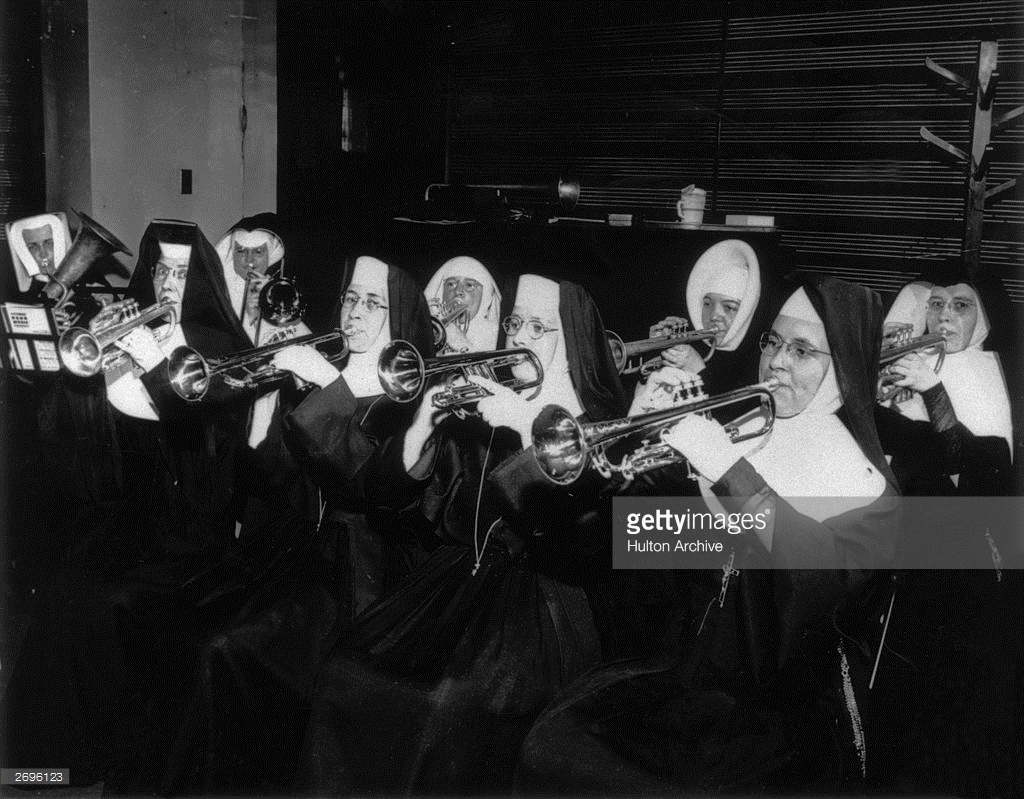
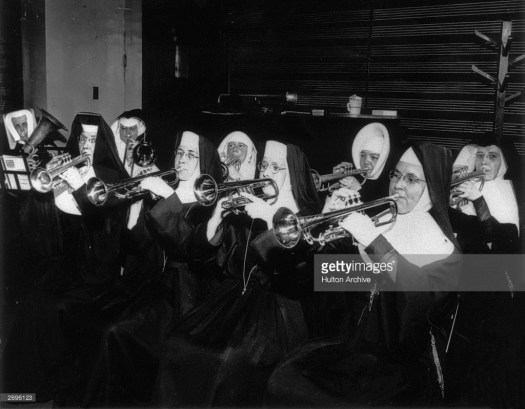
Western music tradition as we know it today is a direct product of centuries of experimentation and development by none other than European religious orders. Monks and nuns throughout the Middle Ages composed, refined, and performed sacred works whose practice would come to define classical theory. It should be no surprise to us to learn, then, that instruments of all sorts were being played in convents across Europe, despite the Catholic Church’s decree that women should not play wind instruments. Nuns have always been pretty rebellious and evidence out of Italy suggests that some of the sisters were talented cornett and sackbut players. Speculation has it that an absence of male voices in the convent choir would lead to a need for lower voices, and what better choice than a trombone?

Says Bottrigari of the nuns of the San Vito convent:

“[the nuns play] cornetts and trombones [cornetti & tromboni], which are the most difficult of musical instruments….with such grace, and with such a nice manner [con tanta gratia, & con si gentil maniera], and such sonorous and just intonation of the notes that even people who are esteemed most excellent in the profession confess that it is incredible to anyone who does not actually see and hear it. And their passagework is not of the kind that is chopped up, furious, and continuous, such that it spoils and distorts the principal air, which the skillful composer worked ingeniously to give to the cantilena; but at times and in certain places there are such light, vivacious embellishments that they enhance the music and give it the greatest spirit” (Bottrigari-MacClintock 59; Bottrigari 49)

(Source)2696123

Looks like things haven’t changed much. Keep up the good work, sisters!

Weekly Round-up 3/7/16


Performances: Easter Services at Bethlehem Lutheran in S Mpls on March 27th are the next thing up for now!

Rehearsals: nothing this week.

Practicing: Starting to make a plan for how I want to be best prepared for doctoral work in the fall. Collaborating with my future professor on the best course to take!

Listening: Blackstar, David Bowie.

Teaching: Healthy practice habits- this includes posture!

Studying: Flow. Plus, looking deeper into our physiology to find how our body moves and works and how we can let it learn naturally.

Relaxing: Doing crossword puzzles, having tea with friends.


Weekly Round-up 2/29/16

Happy Leap Day!

Performances: As always I keep a calendar updated on this site.

This weekend I’ll be performing with Exultate Choir and Orchestra on their series “Emmanuel”- a performance of the best of the best oratorios we know and love. Check out their website or my calendar for dates and locations.

Rehearsals: A dress rehearsal for ECC is the only thing planned, although I am beginning my stint as player-coach for Hamline U’s Wind Ensemble brass this afternoon!

Practicing: I’m getting back into the groove of tunes by adding a few new simple ones to my roster: He’s a Jolly Good Fellow, Camptown Races, Zipadeedoodah.

Listening: Elliot Smith took up my Sunday.

Teaching: Accessing the music- how do we hear each phrase? Are we directing it or waiting for the phrase to guide itself (spoiler alert: we steer this ship)

Studying: Flow. And, I’ll make this official in this section, because I’ll have to start studying some theory and history soon- I was accept to UMN’s music doctoral program! I begin my program in September on track to receive a Doctorate of Music Arts in trombone performance. Ee!

Relaxing: Enjoyed the lovely weather Saturday on a bike ride. Yesterday I took a short class on working live sound and understanding sound boards. It was amazing and I’d love to try it in the field someday soon.


“Lunch With…Lauren Husting!”

You can now watch two of the pieces from my 2/8/2016 “Lunch with…” recital in Sundin Hall on Hamline University campus in convenient YouTube format!

David, Concertino (all)

Mills, Red Dragonfly (1st mvt)

My pianist is the lovely and talented Rebecca Hass.

Enjoy!

Weekly Round-up 2/22/16

Performances: As always I keep a calendar updated on this site.

Nothing happening for the rest of February- phew- but first weekend of March I’ll be performing with Exultate Choir and Orchestra on their series “Emmanuel”- a performance of the best of the best oratorios we know and love. Check out their website or my calendar for dates and locations.

Rehearsals: As noted above, Exultate rehearsals start this week.

Practicing: I took a nice little weekend off- a bit of self-care after a busy and somewhat stressful start to the music year. It always takes a little bit to get back to fighting weight, but the perspective gained is worth it.

Listening: Nick Drake, Bruckner 4, Hamilton OCR.

Teaching: Practical theory and ear training high on my list today.

Studying: Flow is here! Can’t wait to dive into it.

Relaxing: A friend visited me this weekend, hence my opportunity to take some time off and have a mini homebound vacation. We did touristy Minneapolis things and ate good food- it was wonderful! It’s tough to go back to work but I feel refreshed and happy.