Why Students Really Quit

Why Students Really Quit Their Instrument (and how parents can prevent it)

An interesting look at what motivates young musical learners.

Some pertinent quotes as they relate to taking lessons:

Students don’t know how to get better.  Without the proper tools and practice habits to get better at anything, students will become frustrated and want to quit.  It is the role of music educators and parents to give students ownership over their learning.  Teachers must teach students why, how, where, and when to practice, and parents must obtain minimal knowledge about how students learn music in order to properly support them at home.

Most of learning an instrument is learning how to practice, and your private teacher is there to guide you to efficiency in this regard.

Students discontinue playing over the summer.  Statistics show that students who do not read over the summer find themselves extremely behind once school starts — the same goes for playing an instrument!  A year of musical instruction can quickly go down the tubes over the summer vacation if students do not find small ways to play once in a while.  Picking up an instrument for the first time after a long layoff can be so frustrating that a student will not want to continue into the next school year.

I offer summer lessons, and I think they can be some of the most fun. We get more opportunities to play fun things and grow creatively when we can guide our own studies.

The instrument is in disrepair.  A worn down cork, poor working reed, or small dent can wreak havoc on a child’s playing ability.  Sometimes the malfunction is so subtle that the student thinks they are doing something wrong, and frustration mounts.  Students, parents and teachers need to be aware of the basics of instrument maintenance and be on top of repairs when needed.

Instruments that are hard to play are not fun to play. Let me know if your horn needs help, and I will recommend a good repairperson (I know several)!

And parents, I am always available to help you understand what your child is learning from me (and why!).

Happy practicing!
Hey, I can tell when you haven’t practiced

Listen, I was a student, too, and I have gone to my share of lessons unprepared (but I only did this once for Jan at North Texas, and received a well-deserved lashing for it). I have also tried to hide this fact, or cram before the lesson, in order to not disappoint my teacher.

It never works. As a teacher now, I can tell you this: we can always tell. It would be much better for you to say, hey, I haven’t looked at this, I’m sorry, than to fake your way through something. Chances are I’ll be disappointed, but we can find a way to make the lesson productive: Either you can demonstrate how you WOULD have practiced it had you made the time, or we can work on some other aspect of technique or theory.

Now, that doesn’t mean we can spend every lesson avoiding what you didn’t have time to do. I expect that my students find the time during the week (it doesn’t have to be much; 20-30 minutes a day maybe, is better than bigger chunks with gaps in between) to work on what I’ve assigned. You take lessons because you want to progress beyond the skills you need for band, or to match them, or to get access to different music than you might otherwise. There are lots of reasons to take lessons, and lots of reasons for me to have certain expectations about how you will act upon them.

So, how do we get around this dilemma? How do you practice ‘enough’ to ‘fool’ me? Well, first of all, you don’t need to fool me. I am here to help you, and so that means if something gives you trouble, I should be the first to know. If you’ve worked for ages on these two bars and just can’t get them, maybe I can help you move beyond them. You don’t have to be perfect, just prepared.

Now, time management. Kids, and adults, these days, are BUSY. Does anyone know what free time is anymore? How does music fit when it competes with homework, athletics, clubs, friends, downtime?

You could always think of your music practice as homework. 30 minutes of something you have to do every evening even if you don’t have a class the next day. You could think of it as athletic conditioning, which is constant. You could envision it as a project you do for a club that ensures your participation is 100%. You could make music with friends or practice as a way to relieve stress from everything else.

There’s no right or wrong answer here. The only right way to go about managing your practice time is to make sure you’re focused and consistent. And if you’ve been focused and consistent in your personal practice, that will show in your lesson. That will give us something to move forward on.

Happy practicing!

Weekly Roundup 2/24/15

Reading: Taking a little study break for the week.

Practicing: Red Dragonfly, by Amy Riebs Mills, written for Megumi Kanda (of the Milwaukee Symphony). This was a house-warming gift from a friend and fellow musician. I’m excited to learn it and possibly perform it at next year’s Brass Chix!

Rehearsing: Thursday night I begin rehearsals for the Mozart Requiem with Exultate, a local choir and orchestra I have worked with before. Our performances are next weekend, March 6-8, so come see us if you can!

Minnehaha Repertory will be reading Franck:  Symphony in D Minor, Sibelius:  Lemminkäinen’s Return Op. 22 #4, and von Weber: Oberon Overture on Saturday.

Performing: Exultate Mozart Requiem March 6-8th, various locations around the Cities.

Listening: I have a big crush on Janelle Monae so pretty much her whole Metropolis cycle (so far). Also have you seen Jupiter Ascending? I mean, do yourself a favor. Seriously. The soundtrack, by Michael Giacchino, is real purdy, and over the top, and wonderful. He also wrote the music for Lost, the Incredibles, Star Trek, etc.

Teaching: Gearing up for a month of contest performances, so I’ve been encouraging my students to start incorporating performance runs in their practice sessions, and we’ve been doing the same in lessons.

Relaxing: I’m really dying to get outside and do some winter fun before spring, but negative degree days aren’t making that an option. Here’s hoping we’ll have some ‘reasonable’ winter so I can go for a hike in my new snow pants soon.

Weekly Roundup 2/17/15

Reading: Diving into The Musician’s Way, by Klickstein.

Practicing: I don’t think I’ve cracked the cover of my copy of the Kopprasch Vol 2 in…ten years. Starting with #1.

Rehearsing: M’haha rehearsed Franck Symphony in D Minor on Saturday, it was gorgeous.

Performing: Tonight’s Mardi Gras! I’ll be here.

Listening: Brand new Father John Misty!

Teaching:  Go. Slowly. Dang it. There are times when fast practice can be useful, but 95% of the time you should take things slowly so you can put all the pieces together. “Slow practice = fast progress; Fast practice = slow progress” -Per Brevig, Julliard School of Music

Relaxing: Getting friends together. Amazing how infrequently we do this in the winter, and how lonely it can get. Met up with a friend from college two weeks ago, and it was great to catch up. Had beers with a colleague last week, and enjoyed the opportunity to be a trombone nerd for a few hours. Brunch with another friend and colleague on Thursday. Hosted a gathering at my house on Friday night and it was a great collection of folks that brought positive energy in and left good vibes.

The basics: practicing all the things!

It can sometimes be a little overwhelming to think about all the different musical minutiae we have to be adept at when we’re mastering an instrument. Modern day music and music standards are demanding; we have to be able to play around our horns without fuss or struggle.

Of course, there will always be things we’re better at than others, and we can use our big brains to devise ways to make sure we hit all bases on the musical field. Today I’m going to start ‘simple’- with the three main variables of musical style: Dynamic level, range, and articulation.

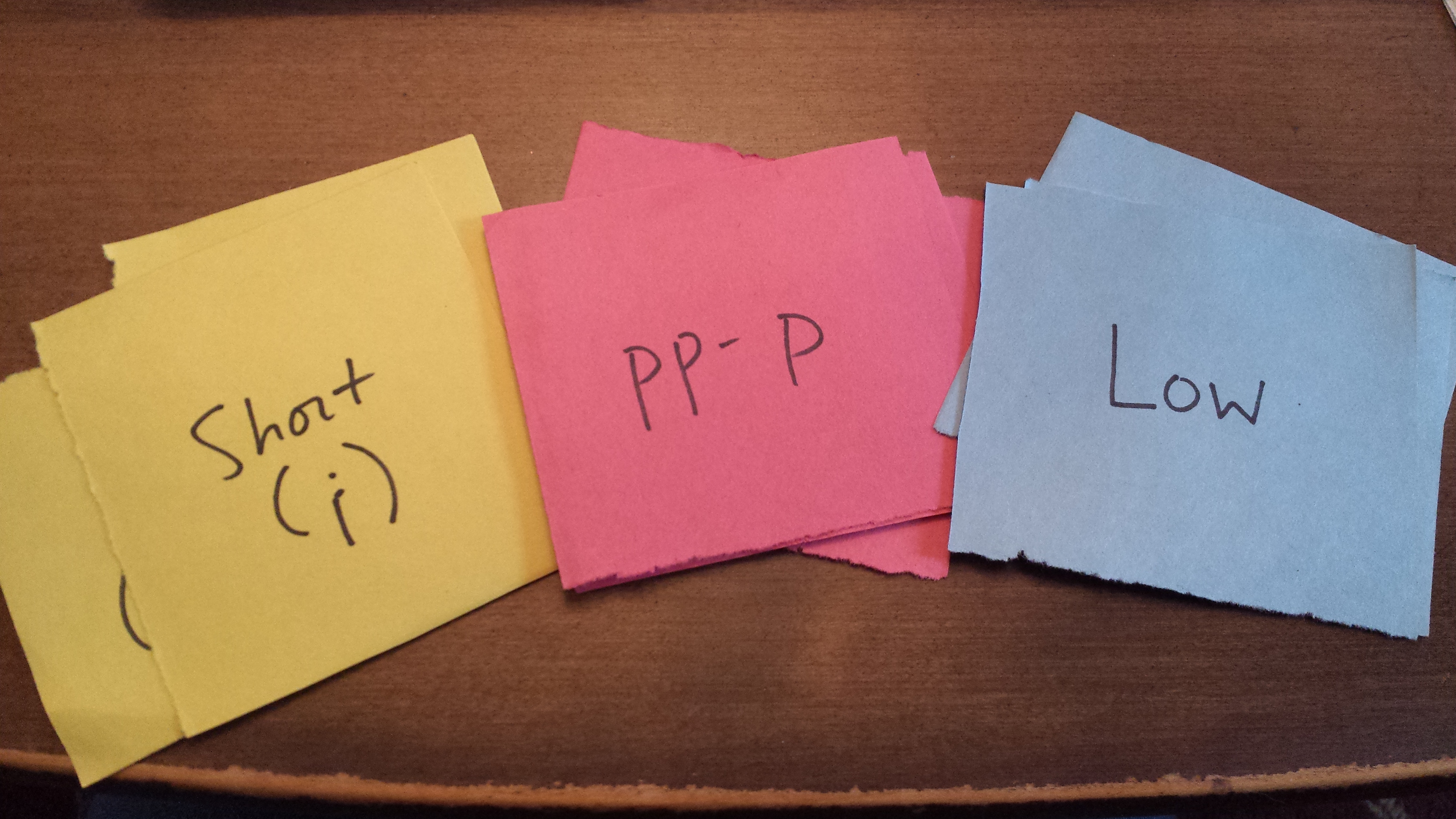
In order to make sure I hit all possible combinations of these three, I’ve starting using my daily tunes in all 12 keys. First, I’ve identified three subsets in each category:
Range High Mid Low
Dynamics f-fff mp-mf ppp-p
Articulation smooth (slurred, legato) short (staccato) marked (marcato, sfz)

From there, I created notecards for each:
20150210_132955

Each morning after I go through about 20 minutes of careful warm-up (long tones, slow slurs, flexibilities), I set up my drone mp3s and pick a simple tune to play in all twelve keys. For now, the key I start in is ‘fixed’- i.e., I pick on. This can also be randomized, of course, as could tempo. Or you could fix one or more of the above variables- freeze range and work on dynamics and articulation in the higher register; freeze range and articulation and work on dynamics on low, staccato notes, etc. Make sure you change it up the next time!

For an example, I’ll use Scottish song “Annie Laurie” as my tune today. The highest tone in this tune is the 3rd, and the lowest is the root an octave and a half below that. So if I choose “high” as my range card, I’ll start somewhere in what I consider my high range, F above the staff to D or Eb above it (depending on the day, this is about as high as I go).

As you can hear from the video my upper register fights a bit at a soft dynamic. So I may consider freezing the range at high and the dynamic at soft for a few days to sort it out.

You can play around with this concept as it works best for you, and of course there are subsets within subsets in all three categories, but this is a great place to start if you need help organizing your practice and strengthening your routine.

Happy practicing!

Weekly Roundup 2/11/2015

Reading: A review of Trombone Technique, the 1971 manual by Dennis Wick, was in order. It’s helpful to see where we’ve been, and what we’ve discovered since! Also, this article is a no-brainer but I guess we need to see things like this to keep funding art in schools:

Practicing: Blume, 36 Studies for Trombone with F Attachment: #19.

Rehearsing: St Peter Street Stompers rescheduled for tonight, so I still have that coming up. Metro Brass met on Sunday night and had a great rehearsal digging into the songs selected for our performance next weekend (which I unfortunately can’t make! There will be a sub holding down my chair). Minnehaha Repertory Orchestra is performing Franck’s Symphony in D Minor on Saturday, so that should be a good time.

Performing: Empty calendar! Send me gigs!

Listening: John Luther Adams, Songbirdsongs; Franck Dm Symphony; Arvo Part, Tabula Rasa.

Teaching: Later today I’ll have a post about covering the basics in practicing: hitting range, dynamics, and articulation as a part of your technical studies to give you more flexibility on the horn. Last weekend I sat in on my friend Melissa‘s lessons to get some insight and inspiration. I love how focused on her students she is, and how carefully she observes their progress. I’ve made copious notes on incorporating that into my own lessons.

Relaxing: Legend of Korra, Books 3 & 4, almost done (eep! what will I do then?). Reading Potluck Supper with Meeting to Follow by Andy Studevant for a book club next weekend. Great insights into the MSP arts community, and very enjoyable reading.

Weekly Roundup 2/3/15

Reading: Beyond Talent: Creating a Succesful Career in Music (Beeching). A review of this great text for young professional musicians. Lots of stuff I’ve forgotten about in the past few years, too.

Practicing: Running through some Arban scale exercises and finding I’ve gotten lazy with my scale practice lately.

Rehearsing: Tonight I have a rehearsal with the St Peter Street Stompers, a trad jazz band I performed with regularly a few years back. It’s nice to be invited to sit in on their upcoming Mardi Gras gig. I’ll have details on my gig site when I have them!
Minnehaha Repertory Orchestra is back at rehearsals this month as well and on Saturday we read through Scheherazade, one of my favorite orchestral works.

Performing: Nothing on the calendar until next week.

Listening: John Luther Adams, Become Ocean; Fleet Foxes; Tallest Man on Earth; Smetana, Ma Vlast

Teaching: Encouraging my students to develop their routine beyond just warm-ups, and to start thinking of it as an integral part of their practice session. Several of my students have taken this to heart and are already sounding stronger and more confident.

Relaxing: Began re-watching Buffy the Vampire Slayer with my friend Meghan last night, because huge nerds. Reading comics, hoping for more snow so I can get out and play.

How to practice for Solo/Ensemble competitions

For my Minnesota-based studio, many of my students are preparing to perform at their regional solo/ensemble contest in March. We’ve picked out pieces, done our research, and are ready to dig in. Although preparing a contest piece shouldn’t be much different than your normal practice, I thought I’d give a few specific tips on what solo performing means in the practice room.

1. Pick a piece that will stretch your talents a little farther, but won’t be so hard you can’t get it prepared in time.
2. Start by listening. Find a recording of the piece and note what the instrumentation or accompaniment is. Think about how you’ll perform it.
3. If your piece has multiple movements, choose the ones you’d like to perform. Consider your order. For example, 3 movement suites don’t have to be done in order if you’re doing, say, the Allegro first movement and the slower second one. You could flip them if it makes sense musically.
4. Start with the big picture. Play along with the recording and note where you may need to spend more time, but get a feel for the piece as a whole.
5. Make your musical decisions early. It’s easier to learn notes and rhythms sometimes when we have a direction for the phrase we’re working up. For example, a fast passage with lots of sixteenth notes also crescendos or has lots of slurs. Sing it the way you’d like to play it, then work it up slowly utilizing all the components.
6. Practice bigger chunks once you’ve got the technical stuff smoothed out. Pieces always feel differently in our hands when we see how the whole work fits together. Breaths may be different, or you may notice that one phrase is hard to get into from the previous one. Work out those new kinks.
7. Practice performing. At least once or twice a week in the beginning, practice running straight through your work as if it were a performance. As the contest draws closer, you should be practicing performing more than you are practicing individual sections.
8. Perform for your friends and family! Play along with the recording again so you can understand how the accompaniment fits in. Count count count your rests.
9. It sounds obvious, but when you get to the performance- have fun! Nerves are a part of performance but remember that your jury wants to hear you do well. No one is out to get you or judge you as a person. Let your musical soul shine through and above all, don’t worry about the parts you think you messed up. They’re gone! End strong.

Good luck, students!

Weekly Roundup 1/27/15

Reading: Still working on The Music Teaching Artists’ Bible.

Practicing: “Duo Concertante for Tenor and Bass Trombone” by Daniel Schnyder. I get together frequently with my friend Derek to sight-read duets and he had just gotten this in the mail. We got about four bars in and realized we’d never be able to read it cold, so I brought it home to get familiar with it.

Rehearsing: I haven’t had any rehearsals this week! Crazy!

Performing: No performances either.

Listening: Iron and Wine, pretty much his entire catalogue, always; Sleater-Kinney, No Cities To Love, which has me swooning it’s so good; Bjork, Vulnicura.

Teaching: Air air air air air. Follow the musical line. Don’t hold anything back.

Relaxing: Making cookies and watching The Legend of Korra.

Kind of a slow week! End of January doldrums, I guess.

The Weekly Round-up

January 2015 has been strong so far, as things go. I’m motivated and happy, and looking forward to the experiences, results, and opportunities that being motivated and happy will bring. I set myself some reasonable but slightly challenging goals (like re-introducing myself to the world of studying various musical topics), and so far I have been maintaining them.

Tuesdays are Blog Days for me (I will certainly write on other days if the inspiration strikes, but I will at the very least post something on Tuesdays), and I’m not feeling particularly inspired by anything new, at least not enough so to write anything great about it. So on days like today, Tuesday Blog Day will be something of a weekly round-up. Here we go!

This Week At Husting Low Brass Studio:

Reading: The Music Teaching Artist’s Bible, by Eric Booth. I picked this up thinking it was about being a better private teacher, but it’s more about how performing musicians can engage their communities in order to reach audiences. It’s not exactly what I do, but it’s given me some great ideas and I’m considering looking more into the idea of becoming a Teaching Artist in the Cities.

Practicing: Tyrell Etude #20, which has some feisty arpeggiated sextuplets that sound awesome when executed correctly. It makes me feel like a fancy concert violinist.

Rehearsing: Metro Brass ran through some new music on Sunday night and rehearsed some pieces that have been in our book for a while. We have a new location for rehearsals that keeps us positioned in a tighter half circle, and in my opinion it was very beneficial to our ensemble unity and flexibility.

Performing: On Saturday my yet-unnamed R&B project recorded a demo at Terrarium Studios in NE Mpls. We put three songs to track: Keep Me In Mind by the Bamboos, Sledgehammer as performed by Maiysha, and Right As Rain by Adele. This is a group of consummate pros and it was a pleasure to play with everyone.

Listening: John Mark Nelson, the new OKGo record, an 80s pop playlist, The Bamboos (seriously hip funk/R&B outfit from Australia), and starting to feel my January urge to mainline a lot of Prokofiev Piano Concertos.

Teaching: Back to basics this week. I’ve had many of my students focus on ‘letting go’ of their air and sound and pushing the limits of what they can play. You don’t know your limit until you test it. There’s no room for playing it safe when you play a brass instrument.
On that note, I had some amazing lessons with students this week that got me really pumped up about how great y’all are. You, my students, inspire me daily.

Relaxing: I took on the January Challenge at my yoga studio, Yoga Sol. 15 classes in January. Tonight will be #8!
I’ve also developed a major obsession with the Avatar: The Last Airbender universe, and I am 100% not ashamed because it is the best thing to ever happen to me. #WaterTribe